Published
The gas station, the dry cleaner, and the machine shop all share a shape: a business operated, something was released, and the record picked up the aftermath. A closed landfill is a different animal. Nothing leaked by accident. The site did exactly what it was permitted to do, and the obligations that follow are not a remediation exercise so much as a maintenance regime that runs for decades and binds whoever owns the ground.
Closure is the beginning, not the end
Most closed landfills in the country were municipal or private dumps that operated long before liner and leachate requirements existed, and many stopped taking waste before the modern regulatory framework was in place. Later ones closed under state solid waste programs with an approved closure plan.
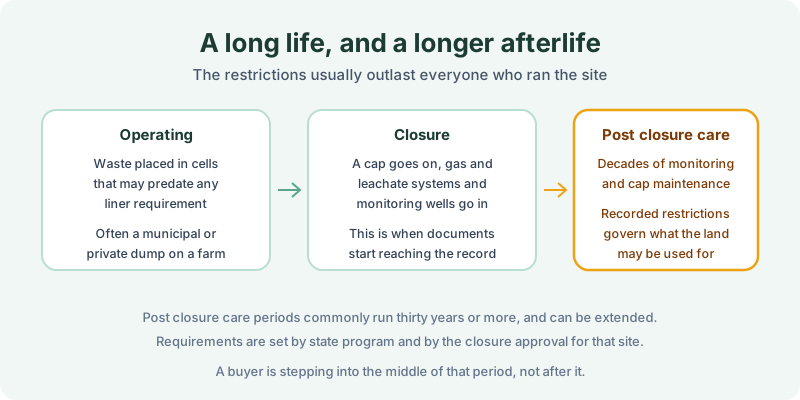
Closure means a cap, usually gas and leachate management, and a network of monitoring wells. Then comes post-closure care, which commonly runs thirty years or more and can be extended if monitoring shows it should be. The exact requirements come from the state program and the closure approval for that specific site, so they vary considerably.
The point for a buyer is the timing. Acquiring a closed landfill, or land that used to be one, means stepping into the middle of that care period rather than after it. The cap has to stay intact, the systems have to keep running, and somebody has to file the reports.
What closure puts on the title
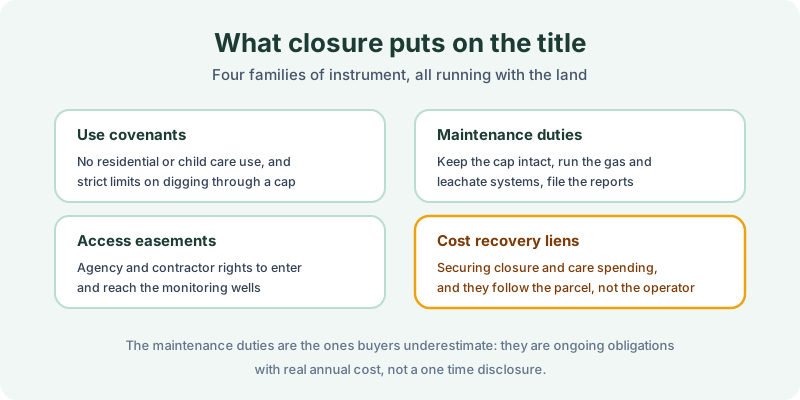
Four families of instrument show up, and all of them are written to run with the land.
Use covenants barring residential or child care use, and limiting excavation, since digging through a cap is the fastest way to undo a closure. Maintenance duties requiring the owner to keep the cap intact, operate the gas and leachate systems, and file periodic reports. Access easements letting an agency and its contractors enter to sample the wells. And cost recovery liens securing what a state or federal program spent, which attach to the parcel regardless of who ran the site.
The maintenance duties are the ones buyers underestimate. They are recurring obligations with real annual cost, not a disclosure to acknowledge at closing, and they are exactly the sort of continuing obligation that a liability protection can depend on being honored. Reading the recorded instrument rather than a summary is how you learn what is actually required, which is why our reports attach the documents.
The neighbors have a records problem too
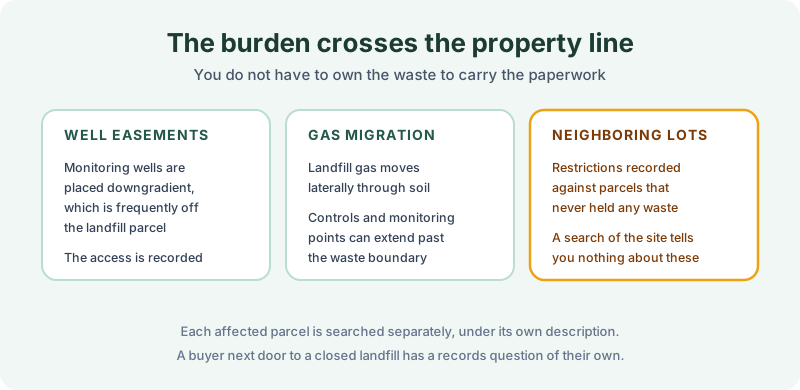
This is the part most easily missed. Monitoring wells go where the groundwater goes, which is frequently downgradient and off the landfill parcel entirely, and the access rights for those wells get recorded against the land they sit on. Landfill gas moves laterally through soil, so controls and monitoring points can extend well past the waste boundary. Use restrictions are sometimes recorded against parcels that never received a single load of waste.
A search of the landfill parcel tells you nothing about any of that. Each affected parcel is indexed under its own description and has to be searched separately, the same problem that shows up on any multi-parcel review. A buyer whose only connection to a landfill is sharing a boundary with one still has a records question worth answering.
Where this lands in a Phase I
Historical use as a disposal site is squarely within the environmental professional’s work, developed from aerial photographs, topographic maps, and agency files. The chain of title contributes to it: municipal ownership in the middle of a rural chain, an unexplained conveyance to a county, or a parcel that was never developed while everything around it was.
Whether a closed landfill is a REC, a CREC, or something the professional treats differently is their determination, not a call that comes out of a records search. What the records half supplies is the instruments, their recording dates, and the answer to whether the obligations everyone is discussing are actually filed against the parcel being bought.
Read the record before the term sheet
Closed landfills get redeveloped regularly, as solar arrays, parking, warehousing, and open space, all uses compatible with a cap. The difference between a workable project and a surprise is knowing what the record already requires. Our 1980 Environmental Lien & AUL report covers that half: certified title abstractors review land title and judicial records from 1980 to the present and document every environmental lien, encumbrance, and AUL found, with the recorded instruments attached. It’s $425, delivered by email in 3–5 business days. Order online, and if something surfaces, here is how to read it.
Get an E1527-21 compliant lien & AUL report
Our 1980 Environmental Lien & AUL reports are researched by certified title abstractors, cover judicial records, and are guaranteed accurate. Delivered in 3–5 business days.
or call 877-848-5337