Published
The short answer is that it does not, unless you ask for it, and the longer answer is the more useful one. An environmental lien and AUL search is scoped to a described parcel, and the edge of that description is the edge of the search. That is how land records are built rather than a shortcut in the product, and it is the same structural point that makes the scope line the most important sentence in how to read an environmental lien and AUL report.
What the ordered search reaches
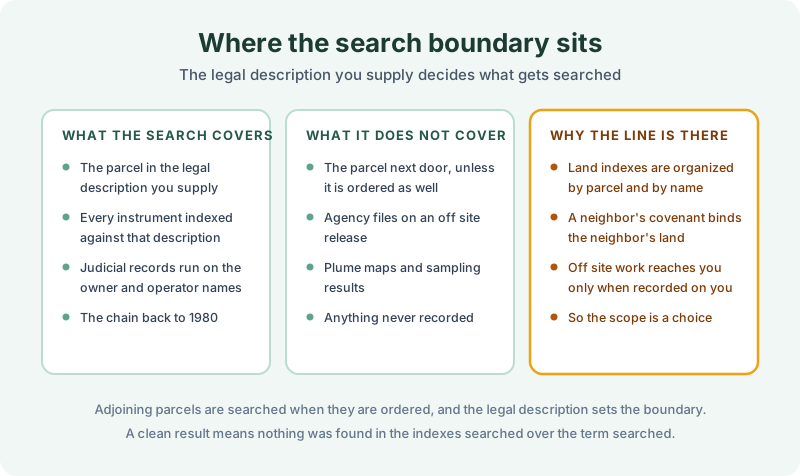
Two indexes do the work. The land records are organized by parcel, so the search pulls the instruments recorded against the legal description you supply, back through the chain to 1980. The judicial records are organized by party, so that half of the search runs on the owner and operator names the chain produces.
Neither index is organized by geography. No query returns everything recorded within three hundred feet of a point, because no recorder’s office is built that way. A search of your parcel finds what was filed against your parcel, and a neighboring parcel is reached only when it is ordered as a parcel of its own.
Why the neighbor still matters
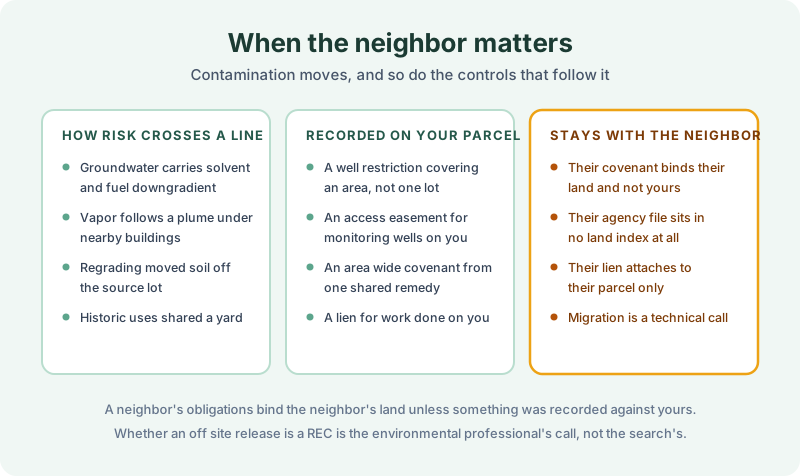
Contamination pays no attention to a lot line. Solvent and fuel travel with groundwater, vapor follows a plume beneath whatever is built above it, and decades of regrading have carried contaminated soil off plenty of source lots onto the ones beside them. Parcels that look separate on a plat frequently shared a yard, a rail spur or a drain.
ASTM E1527-21 accounts for this. The environmental professional is expected to consider adjoining properties when reviewing standard environmental record sources and historical use, which is why a Phase I often names a neighbor the user had never thought about. That work belongs to the consultant and draws on databases and historical sources rather than on the county index. The lien and AUL title search is a separate task with a separate scope, and the two are easy to blur together.
What a neighbor’s cleanup can put on your parcel
A remedy next door can produce instruments recorded against your description, and the ordinary search finds those, because they live in your parcel’s index.
- An area wide groundwater restriction. Where a plume crosses several lots the well prohibition often covers a zone rather than one lot, which is the pattern set out in groundwater use restrictions in the land record.
- An access easement. Monitoring wells and treatment equipment frequently sit downgradient of the release, and the right to install and reach them is recorded against the land they sit on.
- An area wide covenant. One remedy covering a redevelopment block can bind every parcel in it, recorded under the state’s covenant statute.
- A lien for work performed on your land. Where an agency spent money on your parcel while addressing a release that began elsewhere, the statute may still put the lien on yours.
The honest version, then, is that your own search already catches a neighbor’s cleanup whenever that cleanup reached paper filed against you. What it will not catch is an obligation that only ever burdened the neighbor.
When to order the adjoining parcel
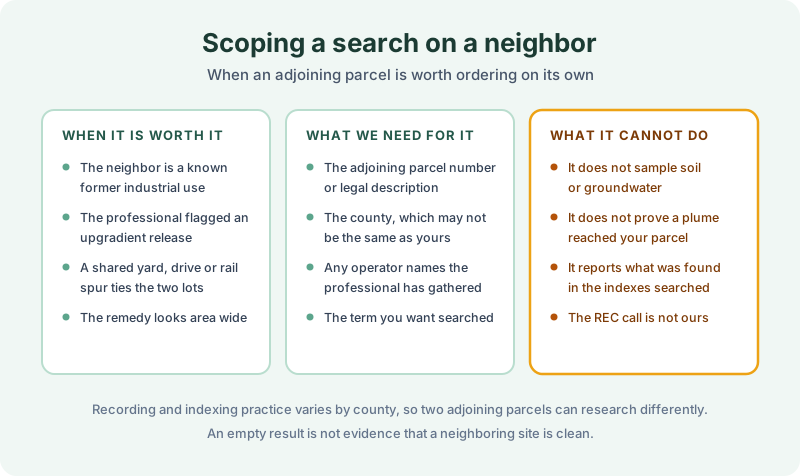
It is a judgment call, and it usually earns its keep when the professional has flagged an upgradient release, when the neighbor carries a known former industrial use, when a shared yard or spur ties the two lots together, or when the remedy already looks area wide. A closed landfill next door is the familiar example, and the reasoning behind it runs through former landfills and the record.
Ordering one is straightforward. We need the adjoining parcel number or legal description, the county it sits in, which is not always the same county as yours, and any operator names the consultant has gathered. Several neighbors can be run together the way a multi-site order is handled.
What the extra search settles
It reports what was recorded and indexed against that neighboring parcel over the term searched, with the instruments attached. That is worth having, because a covenant next door usually describes the remedy, the contaminant and the extent of the area involved.
It does not sample anything, it does not establish that a plume reached your property, and an empty result is not evidence that the neighboring site is clean. Recording and indexing practice varies by county, and two adjoining parcels can sit in different counties with different practice. Whether an off site condition amounts to a recognized environmental condition is the environmental professional’s determination, and the records are one input to it rather than the answer.
The 1980 Environmental Lien & AUL report is scoped to the parcel you name. Our certified title abstractors review land title and judicial records from 1980 to the present and document every environmental lien, encumbrance, and AUL found, with the recorded instruments attached. It’s $425, delivered by email in 3–5 business days. Order online for the subject parcel, and add the neighbor as its own order when the diligence calls for it.
Get an E1527-21 compliant lien & AUL report
Our 1980 Environmental Lien & AUL reports are researched by certified title abstractors, cover judicial records, and are guaranteed accurate. Delivered in 3–5 business days.
or call 877-848-5337